



For a malnourished spirit, blight of apathy, for sea sickness, Listen to me, I will help you.
The Folkestonelings speak of the sight
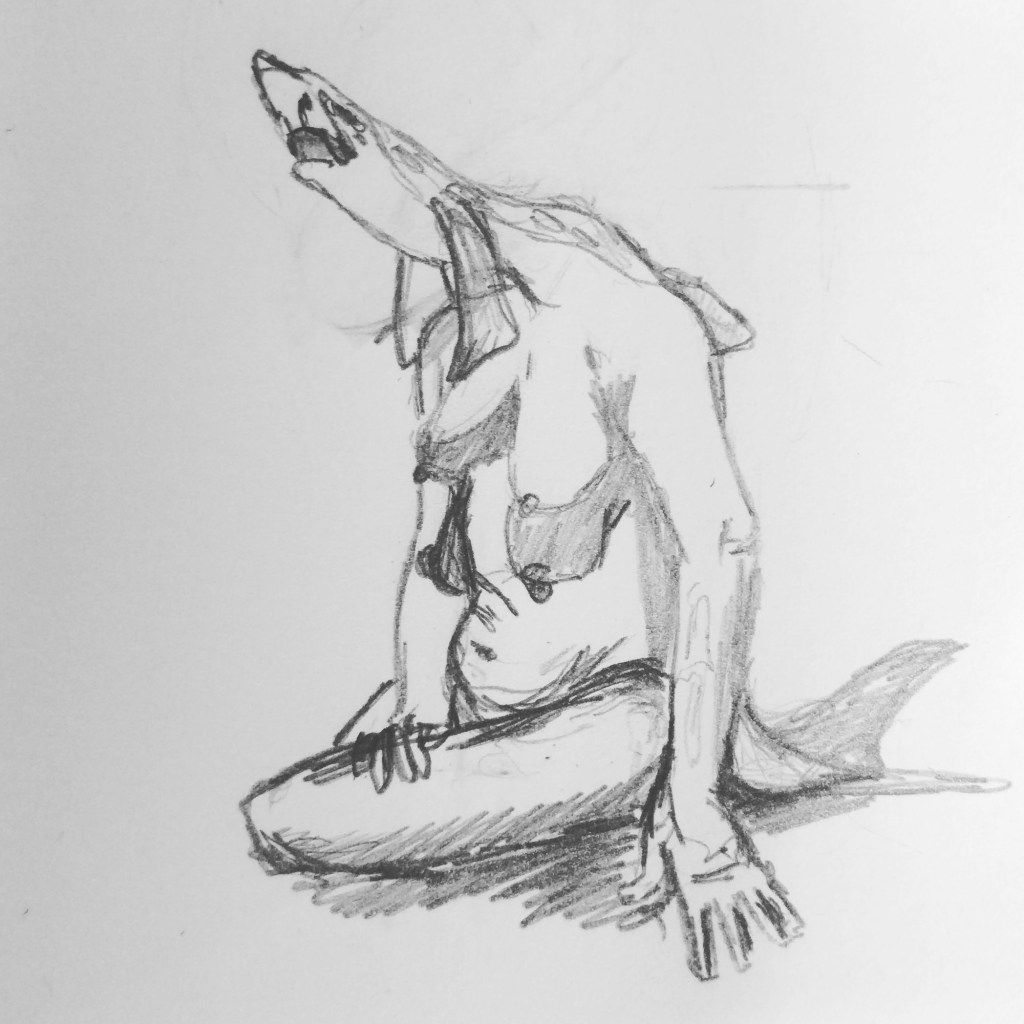
of a dogfish-woman. Fish-nurse on wet rocks.
The dogfish-woman neither folk nor fish entirely,
did once nurse two shipwrecked foundlings.
Held to the breast, kept from the storm.
At daybreak the storm passed The abbess came to the shore.
The dogfish-woman did relinquish the children and depart to the waves foam.
The children grew and were not sick from their brackish milk.
The creature is still seen on shore-rocks when clouds churn.
The sight of her or her sign collected, heralds good fortune: Good treatment for your ailment.
A full essay and analysis of the original text is printed in the artist’s book “In Search Of The Dogfish Woman”. This is the place to go for in depth information about the story. However, included some references and some bonus information below that will extend your knowledge about the story and the discourse around it.
Arguments Against My Reading:
I have included some of the more pressing arguments against my reading of the Dogfish-Woman text.
Dogfish is a term that we don’t see used often before the 15th century. The name is said to derive from the behaviour of the small sharks – to swim and hunt in packs.
The Old English word in the manuscript docgamereswin, a simple conjoining of the words for dog (docga) and dolphin (mereswin) may not refer to the same species we refer to as dogfish today. Docgamereswin is a kenning, a phrase made from two separate nouns meant to be understood figuratively.
Docgameresqwin-cwene (dogfish-woman) is in a sense a double kenning.
For those unfamiliar with the literary device of kennings, a clearer example of would be ‘whale-road’. That phrase is used to describe the sea in the Old English epic poem Beowulf. We can see other kennings employed in the narrative of the Dogfish-Woman; wave’s-foam has an obvious meaning, but fish-nurse (fisc-cildfostre) though it re-enforces the mermaid image doesn’t clarify much about the creature’s appearance. We therefore cannot say with any certainty that the creature in the text is indeed part woman and part dogfish, it could be some other kind of creature.
Despite this argument I feel confident of my interpretation of the text for two reasons. Firstly, the lesser spotted dogfish is extremely common around British shores, not least Folkestone, where they are commonly seen both in the waters and washed up. Secondly, I think it is significant that the Dogfish-Woman is not referred to as a mermaid in the text. There is a word in Old English for mermaid, ‘meremenin’, its absence from this text shows that the writer wished to convey something specific and unique about this creature’s appearance: One kenning describing the creature tells us what is important about its human attributes, that it nursed. The other kenning must be intended to tell us something important about its fish half, that it resembled a particular species, that which we call ‘dogfish’ in the modern day we can reasonably assume to be the most likely candidate.
References and further reading (with useful links)
Leechcraft: Early English Charms, Plantlore and Healing
My podcast about the Beowulf Poem / episode 1 – of hope and heathens
My podcast about the Beowulf Poem / episode 2 – WYRD – uncertain Fate
My podcast about the Beowulf Poem / episode 3 – Grendel
My podcast about the Beowulf Poem / episode 4 – Kennings
My podcast about the Beowulf Poem / episode 6 – Interlace Art
 Jim Lockey