
October 2024
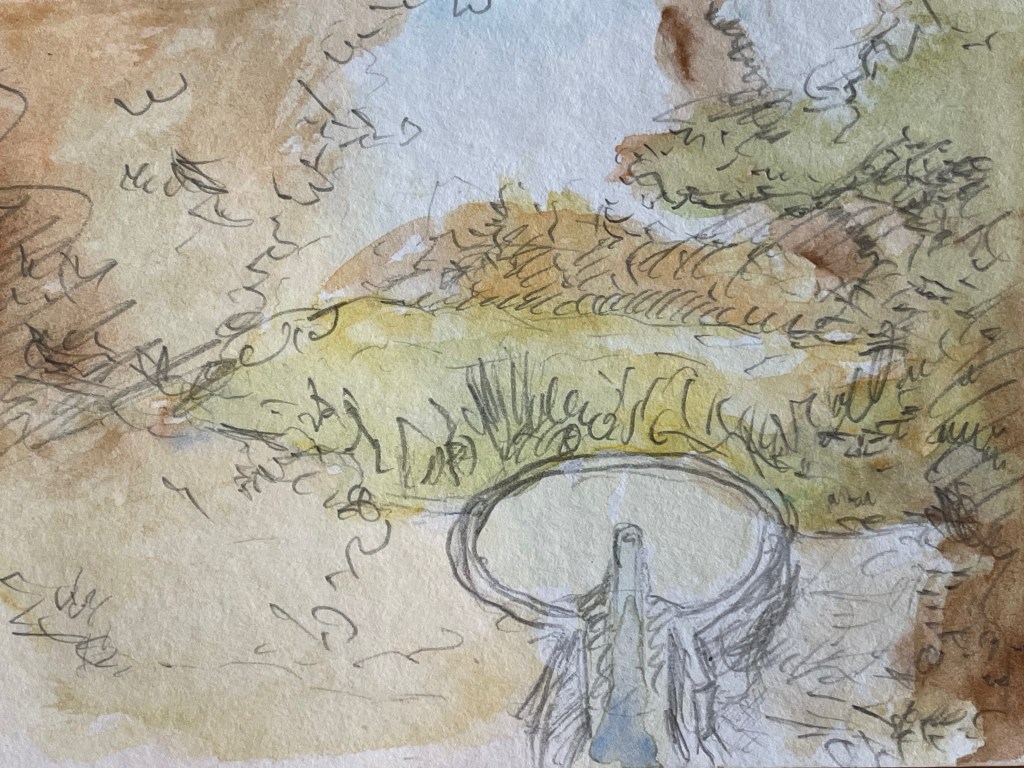
A short hike, not far beyond the residential streets of Folkestone to find its little known holy well.
A ‘holy well’ is a water source, often a spring that is considered sacred in religious or cultural traditions. There’s lots of them around the UK, some are Christian in origin as the name suggests, others have older roots and were christianised at some point in their history. The story of each holy well is unique though there are many common features, such as being believed to have healing properties. Folkestone’s holy well is no exception. I couldn’t find any historical sources that directly talked about its restorative powers, but its a detail that has entered the folklore about the site.
The well, so the story goes, was a place where pilgrims travelling to Canterbury would draw water. Early accounts of it give it the title ‘St. Thomas’ well, after the martyr Thomas Becket. By the 19th century there was a concrete structure around the well, as can be seen in old postcards of the site, and the first mentions of it appeared in writing:
“A short distance from this to the immediately at the bottom of Sugar Loaf Hill a remarkable spring of beautiful water known as Well or St Thomas’s Well Why so called saith not By some it is thought that it was resting place of the pious souls who worshipped shrine at Canterbury but how those worthies here cannot be conjectured It is now used as sheepwash”. – H. Stock, 1851
“Sheltered by the rank rushes lie the dark waters of Holy Well Do those raised tracings in the grass cover the remains of some hermitage The country people tell you about the pilgrims to Becket’s shrine it is called St Thomas’s Well resting here on their way to Canterbury I confess it seems to me slightly out of road but there it is and all I can tell about it is there is nothing now to be told.”
– S.J. Mackie, 1856
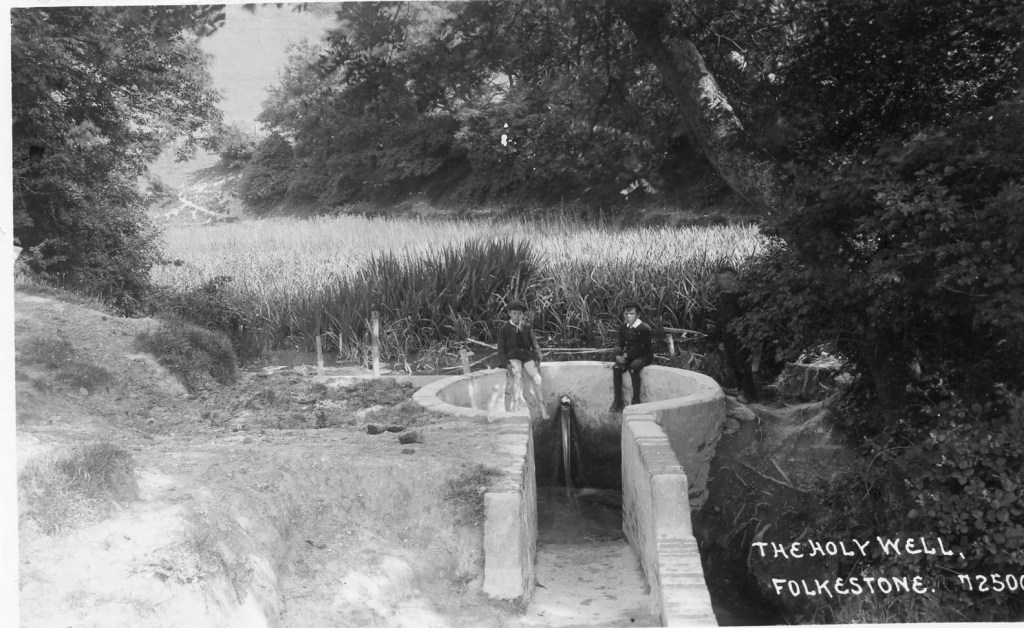
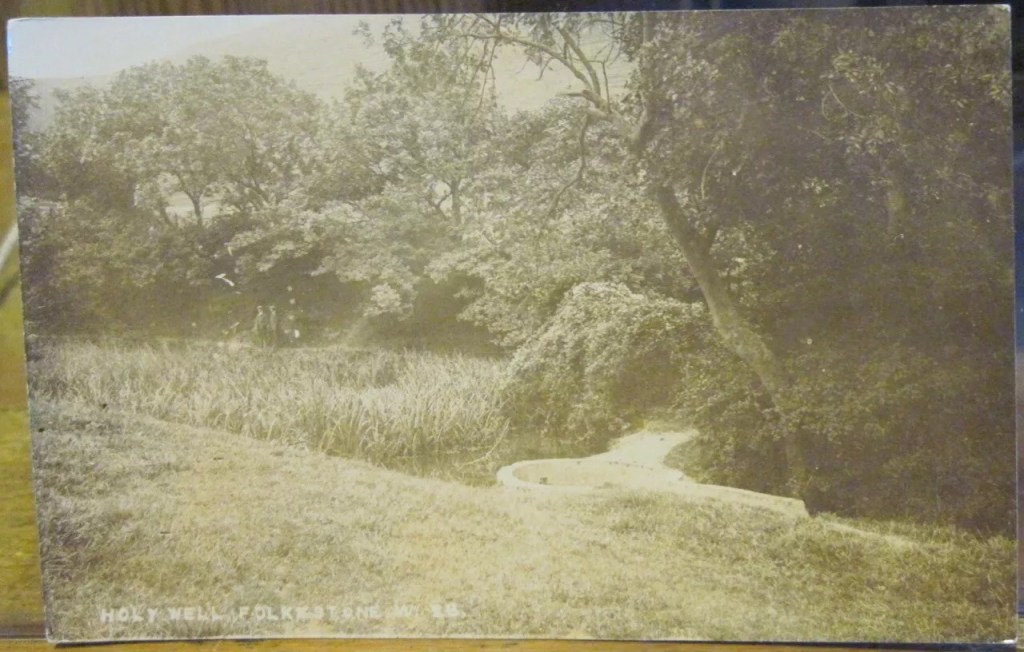
Those old postcards show a round brick and concrete structure set into a bank, encircling a spring. Behind is a field of reeds indicating an area of wetland, these photos were the key to ensuring I had found the right spot as I could compare them to whats there today. People locally either didn’t know it existed, weren’t sure, or couldn’t agree on where it was. There was one video online (before my one) in which a guy finds a tiny muddy trickle and what appears to be a breeze-block and says thats the well. It isn’t. He meant well but had found little more than a ditch. When the only evidence of the site from recent years was an 8 year-old video filmed in the wrong place I knew I had my work cut out for me.
A housing estate built in (i think) the 1980s bears street names like ‘Holy Well Avenue’ and ‘Pilgrim Spring’, which are a clue that there is a holy well nearby. I started my search at the avenue and headed from there onto the North Downs and over a large local hill called Sugarloaf Hill. I meandered my way toward where the well was marked on the OS map.
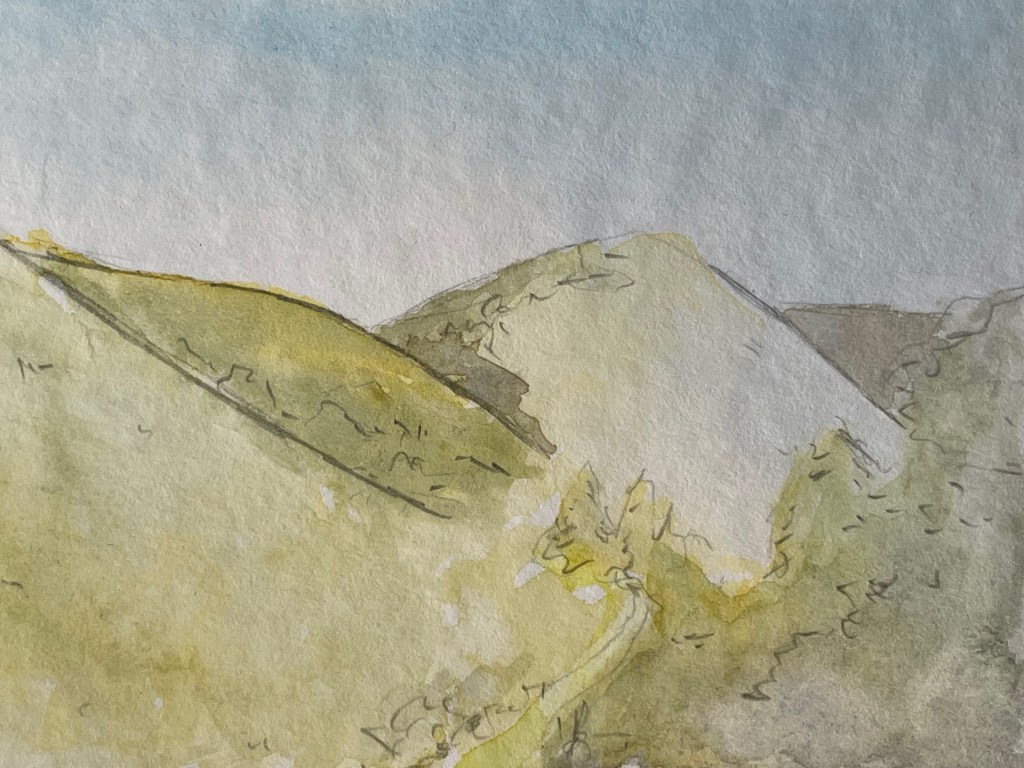
Sugarloaf hill is famous in Folkestone as for over 50 years the local churches lead a procession to its summit every Easter, placing crosses on it. Its a kind of modern day pilgrimage. Unbeknownst to the couple of hundred locals that join the procession each year, they were passing close to an ancient pilgrimage site.
The well itself is behind the hill, but for the views its worth going over the summit. A steep climb, followed by a slippery descent brings one into a maze of trees, bushes, and lots of mud.
I found the well itself amongst overgrown bushes. Part of the cicular concrete structure remains and the water runs clear. The field of reeds above is still there and can be seen from the summit of Sugarloaf hill when you know what you’re looking for.
I drank from the well. But to be on the safe side I filtered the water using a Katadyn BeFree. It was cool and refreshing. I did have a cold when I visited and it did clear up the next day, but I can’t say for certain if Folkestone’s Holy Well healed it. In any case, thats history you can taste and well worth a visit.
I was particularly interested in the site as it was so mysterious and shrouded in folklore. Folklore (Folkestone’s folklore specifically) has been an influence in my art practice, so seeking out the Holy Well of Folkestone felt special, like I was participating in bringing something tangible out of folklore.
Citations:
1851, H.stock, illustrated hand-book to Folkestone and its picturesque neighbourhood
1856, S.J Mackie, A Descriptive and Historical Account of Folkestone and Its Neighbourhood
 Jim Lockey